
Rash Treatment
in Denver, This Week
A rash you can’t explain deserves an answer now — not in three months. Same-week evaluation, a real diagnosis, and treatment started at the same visit.




Understanding Rashes
What’s Causing Your Rash?
Most rashes come from a short list of familiar culprits. Contact and allergic reactions are the skin’s response to something it met and did not like — a new soap or detergent, nickel in a belt buckle or a pair of earrings, fragrance in a lotion, or a plant you brushed past on a trail. Hives (urticaria) are raised welts that appear, fade within hours, and turn up somewhere else. Heat and sweat rashes settle where clothing traps moisture. And drug reactions can surface days or even weeks after starting a new medication.
Then there is the honest category: rashes that need a trained eye. Red, itchy, scaly skin is the final common appearance of a long list of very different conditions, and several of them look nearly identical in a photograph. Telling them apart is exactly what an in-person exam is for — the pattern, the borders, where it sits on the body, the timeline, and what changed in the days before it started narrow the list quickly. Itchy patches that come and go in the same places for months are often eczema rather than a one-time reaction.
Some rashes should not wait. A rash spreading rapidly, blistering or peeling, involving the face or mouth, or arriving with fever or real pain deserves same-day or next-day evaluation — call us and we will find you a slot. If you are having an anaphylaxis-level reaction, with swelling of the lips or tongue, difficulty breathing, or lightheadedness, the emergency room is the right place rather than our office.
How Are Rashes Treated?
A rash is a symptom, not a diagnosis — so we start by naming what it actually is. Most rashes are identified in a single visit from your history and the exam, and treatment begins before you leave. For contact rashes that keep coming back, patch testing finds the specific trigger so it stops returning.
- Name the rash – History and an in-person exam identify what it is, usually at the first visit
- Start treatment the same day – Prescription topical and oral therapy sent to your pharmacy before you leave
- Find the trigger – Patch testing for contact rashes that keep returning, so they stop returning
Evidence-Based Care
Name the Rash. Then Treat It.
Red, itchy, scaly skin is the final common appearance of a long list of very different conditions, and several of them look alike in a photograph. We identify which one you have before anything is prescribed. A rash is a medical problem, so the visit is billed to your insurance like any other medical dermatology appointment — our pricing and insurance page has the details.
Same-Week Evaluation
An in-person exam and a careful history, which for most rashes is all it takes. The pattern, the borders, where it sits on the body, and what changed in the days before it started narrow the list quickly, and the rash is usually named at that first visit.
Prescription Topical Therapy
Prescription topical steroids matched in strength to the rash and to where it sits — thin skin on the face and eyelids needs something gentler than the palms. Prescriptions go to your pharmacy at the visit rather than after a second appointment.
Oral Antihistamines & Short Oral Courses
Oral antihistamines quiet the itch, especially overnight, and a short oral course can shut down a widespread or severe reaction. We adjust the dose until the itching actually settles rather than leaving you to manage around it.
Patch Testing for Contact Rashes
Standardized allergen panels are worn on the upper back for about two days, then read twice so the delayed reactions are caught as well. You leave with a specific list of what your skin reacts to and where those substances tend to hide.
Skin Scraping & Biopsy
When the exam leaves genuine doubt, a skin scraping or a small biopsy settles it. It is a short step at the same visit, and it is what keeps you from months of treating the wrong condition.

Questions About Your Rash? Ava Has Answers
Not sure whether your rash needs an appointment this week or can wait a few days? Wondering whether it could be your new medication, whether it is contagious, or what patch testing actually involves? Ava, our skin care assistant, gives instant, personalized answers 24/7—no appointment needed.
Our Team
20+ Years of Denver Skin Care
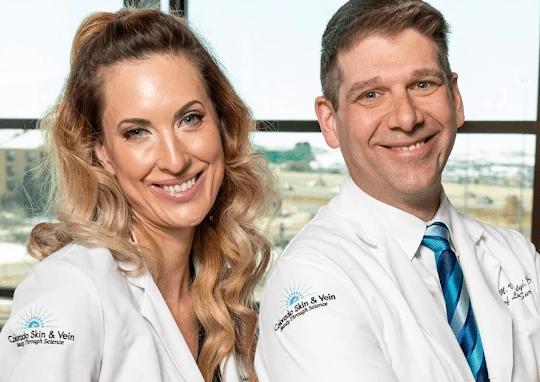
The team at Colorado Skin & Vein, led by David Verebelyi, MD, and Christina Jordan, FNP, CANS, has been caring for Denver-area skin for more than two decades—from everyday medical dermatology to advanced laser and procedural care.
Rashes are among the most common reasons people come to see us, and we keep room in the schedule for them. Seeing them every week is what makes a fast, confident diagnosis possible—and a plan that starts the day you come in.
- Board-certified physician leading the practice
- Everyday medical dermatology for kids, teens, and adults
- Rashes, hives, and allergic reactions evaluated in one visit
- Prescription topical and oral therapy started the same day
- Same-week appointments at our Greenwood Village office
Common Questions
Rash Treatment FAQ
When is a rash urgent?
A few patterns deserve attention right away: a rash spreading quickly over hours, blistering or peeling skin, a rash involving the face, eyes, or mouth, or one that arrives with fever, real pain, or feeling generally unwell. Call us and we will work you in same-day or next-day. If you are having an anaphylaxis-level reaction—swelling of the lips or tongue, trouble breathing, or lightheadedness—go to the emergency room instead. Most rashes are not urgent, but they are still worth having looked at before they take over your week.
What will you do at my visit?
We start with your history: when the rash appeared, how it has changed, what you have already tried, and what was new in the days before it started. Then we examine the skin in person—the pattern, the borders, and where it sits on the body tell us a great deal. In most cases that is enough to name it, and treatment begins right there. If the exam leaves genuine doubt, a skin scraping or a small biopsy settles it.
Do you treat hives?
Yes. Hives (urticaria) are raised, itchy welts that come up, fade within hours, and reappear somewhere else. Acute hives last less than six weeks and often trace back to a food, a medication, or a recent infection; antihistamines at the right dose settle most of them, and we adjust until they do. Chronic hives run longer than six weeks and frequently have no single identifiable trigger—those need a more structured approach, including a look at other possible causes and a longer-term plan to keep them suppressed. Either way, living with them is not the only option.
Could it be an allergic reaction to my medication?
It can be, and it is worth asking about. Drug rashes usually appear days to a couple of weeks after starting something new, often as widespread pink spots across the trunk and limbs. Bring a list of everything you take—including over-the-counter products and supplements—and we will look at the timing together. Never stop a prescribed medication on your own; we coordinate with whoever prescribed it. A drug rash with blistering, mouth involvement, or fever is the version that needs to be seen immediately.
Is my rash contagious?
Most are not. Contact reactions, hives, drug rashes, heat rashes, and eczema cannot be passed to anyone else, however dramatic they look. A smaller group of rashes is caused by an infection and can spread through close contact or shared items. Because the two groups can look similar, guessing is not much help—a diagnosis tells you exactly where you stand, and whether anyone else at home needs to take care.
Do I need a referral?
No. You can book directly with us, and most patients do. A few insurance plans require a referral for specialist visits, so it is worth a quick look at your plan, but nothing on our end stands between you and an appointment this week.
Will insurance cover a rash visit?
Yes, in most cases. A rash is a medical problem, so the visit is billed to your insurance like any other medical dermatology appointment, and most plans are accepted. What you owe depends on your own copay and deductible. Our pricing and insurance page has the details, and you are always welcome to ask us before anything begins.
What is patch testing?
Patch testing finds the exact substance a contact rash is reacting to. Small panels holding standardized allergens are applied to the skin of your upper back and worn for about two days, kept dry. We remove them and read the reactions, then read again a couple of days later to catch the delayed ones. You leave with a specific list of what your skin reacts to and where those substances tend to hide—which is what finally makes a recurring rash stop recurring.
Why won’t my rash go away with hydrocortisone?
Over-the-counter hydrocortisone is the mildest steroid available, and for many rashes it is simply not strong enough to break the cycle. Prescription strengths are considerably more effective, and they are matched both to the severity of the rash and to where it sits—thin skin on the face and eyelids needs something gentler than thick skin on the palms. There is also a second possibility worth ruling out: a rash that does not respond to a steroid may not be the kind of rash a steroid treats. That is a good reason to have it looked at rather than buying a stronger tube.
Can stress cause rashes?
Stress rarely creates a rash out of nothing, but it is a well-recognized trigger and amplifier. It can set off hives, flare eczema and psoriasis, and make itching noticeably harder to ignore—and the poor sleep and scratching that follow keep the cycle going. Treating the skin directly usually breaks that loop faster than waiting for life to calm down, and it is worth doing rather than writing the rash off as something you simply have to tolerate.
Denver's Trusted Skin Experts
For 20 years, Denver-area families have trusted us with their skin. Appointments this week, a clear answer instead of a guess, and treatment that starts at the same visit.