
Eczema & Dermatitis
Treatment in Denver
Itchy, inflamed, flare-prone skin is exhausting — and you shouldn’t have to keep guessing at it. Our dermatology team identifies your triggers, calms active flares fast, and builds a routine that keeps your skin comfortable between them. Appointments available this week.
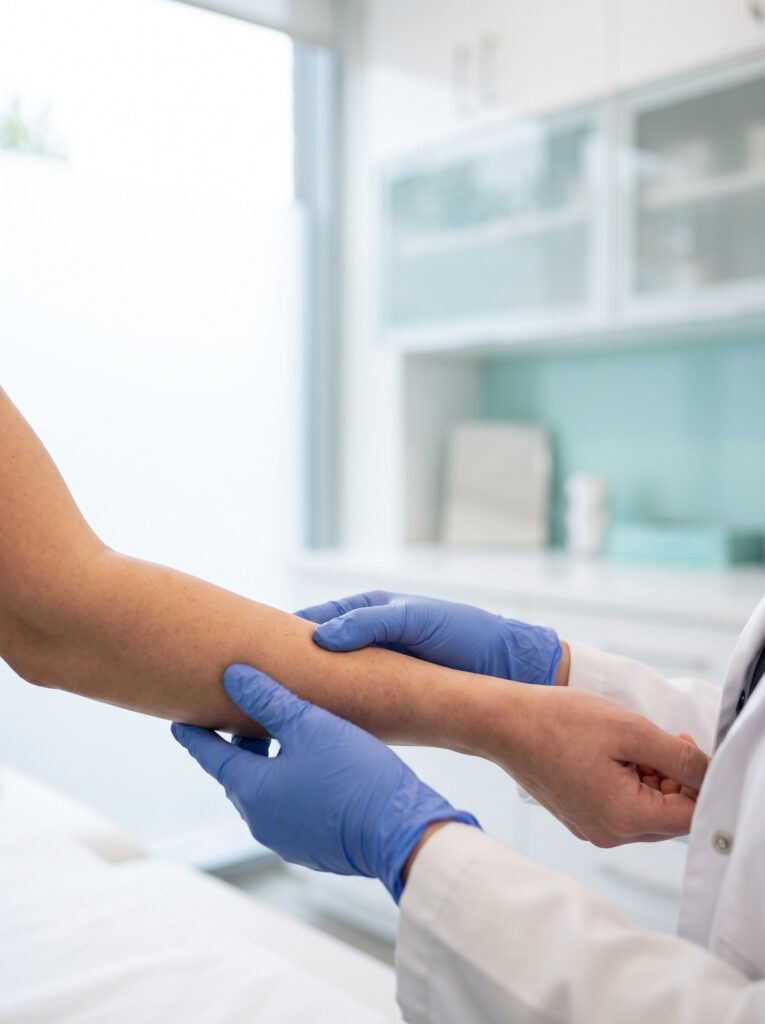




Understanding Eczema & Dermatitis
Understanding Eczema & Dermatitis
Eczema and dermatitis are what happens when your skin barrier stops holding moisture in and irritants out, and your immune system overreacts to what slips through. The result is the same frustrating cycle: dry, red, itchy patches that flare, calm down, and come back.
This page covers the two forms we treat most often. Atopic dermatitis (eczema) is the chronic, often lifelong type that runs in families and tends to show up in elbow creases, behind the knees, on the hands, and on the face. It usually starts in childhood, often travels with asthma and seasonal allergies, and flares when the barrier dries out or the immune system gets provoked. Contact dermatitis is a reaction to something your skin touched — a soap, a metal, a fragrance, a fabric, a plant — and it shows up exactly where the contact happened, which is the clue that leads us to the cause. Irritant contact dermatitis builds from repeated exposure like frequent handwashing or cleaning products; allergic contact dermatitis is a true immune response, and patch testing is how we pin down the culprit. Flaking and redness around the scalp, brows, and nose is usually seborrheic dermatitis — a related but distinct condition we treat separately.
Colorado makes both harder. Our dry air pulls moisture out of skin year-round, and winter indoor heating strips what’s left — which is why so many Denver patients flare from October through March. Scratching makes it worse still: every scratch damages the barrier a little more, which triggers more itch. Breaking that itch-scratch cycle is where real treatment starts.
How Is Eczema Treated?
There’s no single fix, and anyone who promises one isn’t being straight with you. Effective treatment pairs something that shuts down the active flare with a daily routine that keeps the barrier intact — matched to how severe your eczema is, where it shows up, and what sets it off.
- Calm the flare – Prescription topicals bring active, itchy patches under control quickly
- Find the trigger – Identifying what sets off your flares prevents the next one
- Protect the barrier – A daily moisturizer and cleanser plan keeps skin calm between flares
Real Relief
Calm the Itch. Repair the Barrier.
No two cases of eczema behave the same way — severity, location, and triggers all differ. We start with what will control your flare now, then build the maintenance plan that keeps it from coming back. Most eczema and dermatitis care is medical dermatology, and most insurance plans cover it.
Prescription Topical Steroids
The fastest way to shut down an active flare. We match strength to the body area and monitor how long you use it, so you get quick relief without the thinning and rebound that come from using the wrong steroid in the wrong place.
Non-Steroidal Topicals
Calcineurin inhibitors and newer PDE4 and JAK creams control inflammation without steroid side effects — which makes them the right choice for eyelids, face, and skin folds, and for long-term daily control.
Phototherapy
Controlled narrowband UVB delivered in-office calms widespread or stubborn eczema that topicals alone cannot reach. Sessions are short, and most patients see meaningful improvement over a course of treatment.
Biologic Therapy
For moderate-to-severe eczema that has not responded to topicals, injectable biologics such as dupilumab target the immune pathway driving the disease. It is a genuine change in outlook for patients who have tried everything else.
Trigger Identification
Contact dermatitis has a cause, and finding it ends the flare cycle. We work through soaps, detergents, fragrances, metals, fabrics, occupational exposures, and stress to pinpoint what your skin is actually reacting to.
Barrier Repair Plan
The daily cleanser-and-moisturizer routine that does the quiet work between flares. We tell you exactly what to use, when to apply it, and what to stop using — especially critical in Colorado’s dry air and winter indoor heat.

Have Questions About Eczema? Ask Ava
Our Team
20+ Years of Medical Skin Care
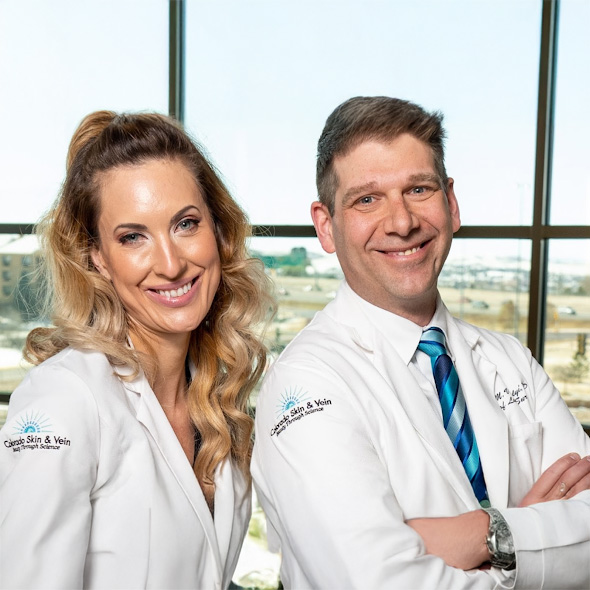
The team at Colorado Skin & Vein, led by David Verebelyi, MD, RVT, and Christina Jordan, FNP, CANS, has been caring for Denver-area skin for over two decades — treating chronic conditions like eczema, dermatitis, and psoriasis alongside advanced laser and vascular medicine.
Chronic skin disease rewards experience. Knowing which topical belongs on an eyelid, when a patient is ready for phototherapy, and when it is time to talk about a biologic is the difference between managing eczema and just chasing it.
- Double board-certified physician
- Experienced dermatology provider team
- Fellow & Instructor, American Society for Laser Medicine and Surgery
- Medical dermatology for chronic conditions like eczema and psoriasis
- Most insurance plans accepted, including Medicare