
Nail Fungus Treatment
in Denver
Thick, yellowed, crumbly nails deserve more than drugstore guessing. Roughly half of “fungal” nails turn out to be something else — so we test before we treat, then clear it properly.
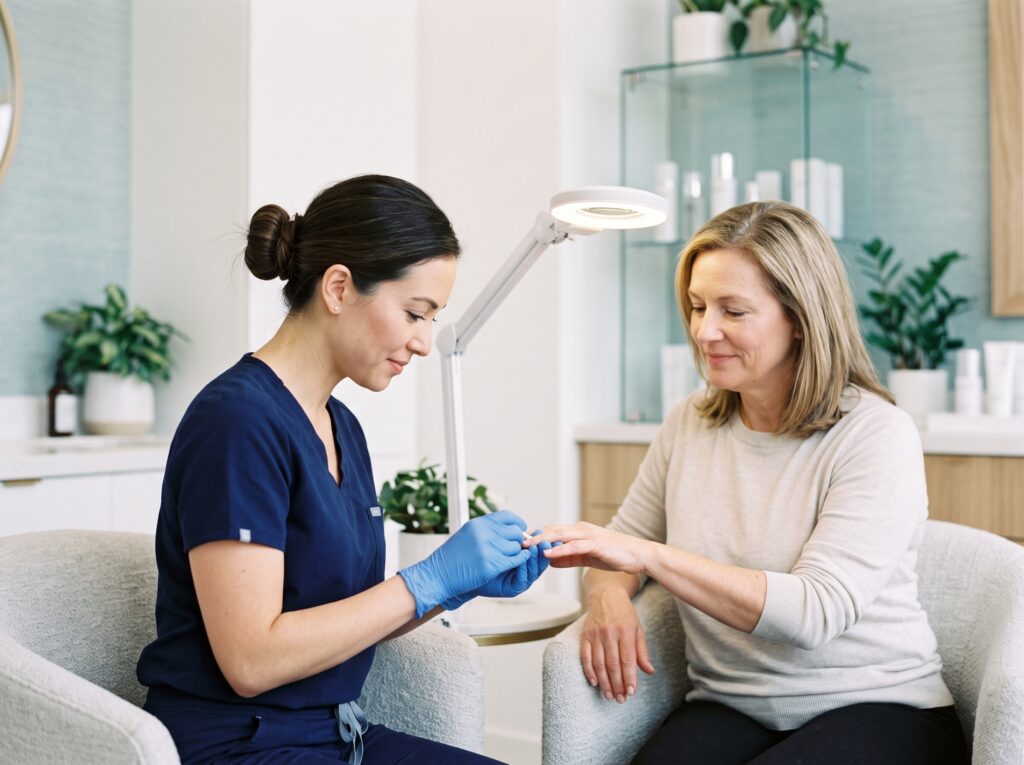




Understanding Nail Fungus
Why Nail Fungus Beats Home Treatment
Onychomycosis lives underneath the nail plate, not on top of it. That hard shield is exactly what makes the infection so persistent — creams, polishes, and soaks sit on the surface while the fungus grows in the nail bed below, out of reach. It is why months of drugstore treatment so often end with a nail that looks the same as it did at the start.
There is a second problem, and it is the one most people never hear about. Roughly half of thick, discolored nails are not fungal at all. Nail psoriasis, old trauma, and ordinary age-related thickening look remarkably similar, and an antifungal does nothing for any of them. That is why our dermatology team confirms the diagnosis first — a painless nail sample and in-office KOH testing — before anyone commits to months of therapy.
Left untreated, nail fungus does not resolve on its own. It thickens, spreads slowly to neighboring nails, and can pass to the skin of others in the household. (Athlete’s-foot-style ringworm of the skin is covered on our warts & skin infections page.) Confirmed and treated properly, it clears.
How Is Nail Fungus Treated?
We start with the question most treatment skips: is this actually fungus? A painless nail sample answers it the same visit. From there the plan follows the result — a prescription topical for early or limited disease, or a monitored oral course for established toenail infection.
- Confirm the diagnosis – A painless nail clipping and in-office KOH testing, with culture or PAS staining when the picture is unclear
- Match the treatment – A prescription topical for limited disease, a monitored oral course for established infection
- Follow the regrowth – Nails clear at the speed they grow, so progress is tracked at sensible intervals
Evidence-Based Care
Test First. Then Treat.
Roughly half of thick, discolored nails are not fungal at all — nail psoriasis, old trauma, and ordinary age-related thickening look much the same, and an antifungal does nothing for any of them. Confirming the diagnosis is what keeps you from spending a year on the wrong treatment. Evaluation and testing are typically billed to your insurance; our pricing and insurance page has the fuller picture.
Confirmation Testing
A small, painless nail clipping and a sample of the debris underneath go to a KOH preparation in the office, with a culture or PAS stain when the picture is not clear-cut. The result decides the plan rather than the appearance of the nail.
Prescription Topical Therapy
Prescription lacquers and solutions for early or limited disease. They penetrate considerably better than anything on a drugstore shelf, particularly once the thickened nail has been reduced in the office.
Monitored Oral Antifungal Therapy
For established toenail infection, oral medication reaches the nail bed from the inside. We review every medication you take for interactions and order baseline bloodwork where your history or the specific drug calls for it, and we keep the course as short as the evidence supports.
In-Office Nail Reduction
Thickened nail is reduced in the office so topical medication can actually reach the nail bed. It also makes the nail more comfortable in shoes while the new growth comes in.
Reinfection Prevention
A meaningful share of cleared nails become reinfected, usually because the conditions that caused it have not changed. Drying between the toes, rotating shoes, sandals in shared showers, disinfected clippers, and treating athlete’s foot promptly all reduce the odds substantially.

Questions About Nail Fungus? Ava Has Answers
Wondering whether that thick, yellow toenail is fungus or something else? Curious how long an oral course runs, what we monitor along the way, or how soon a nail starts looking normal again? Ava, our skin care assistant, gives instant, personalized answers 24/7—no appointment needed.
Our Team
20+ Years of Denver Skin Care
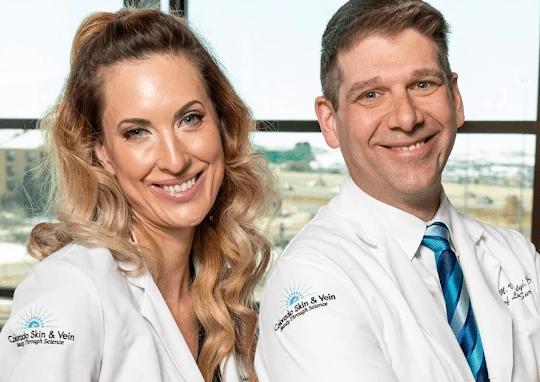
The team at Colorado Skin & Vein, led by David Verebelyi, MD, and Christina Jordan, FNP, CANS, has been caring for Denver-area skin for more than two decades—from everyday medical dermatology to advanced laser and procedural care.
Nail complaints are one of the most common reasons people come to see us, and one of the most commonly misdiagnosed. We test before we treat, so you learn what is actually going on with your nails before committing to anything.
- Board-certified physician leading the practice
- In-office nail testing before treatment begins
- Prescription topical and oral antifungal therapy
- Monitored oral courses with lab work when indicated
- Same-week appointments at our Greenwood Village office
Common Questions
Nail Fungus Treatment FAQ
How do you know it’s really fungus?
We test. A small, painless nail clipping and a sample of the debris underneath go straight to a KOH preparation in the office, and we add a culture or PAS stain when the picture is not clear-cut. It matters more than people expect: roughly half of thick, discolored nails turn out to be nail psoriasis, old trauma, or ordinary age-related thickening rather than infection. Those need a different plan entirely, and confirming first is what keeps you from spending months on the wrong one.
Why didn’t the drugstore polish work?
Because the fungus is not on the nail — it is underneath it. The nail plate is a hard, dense shield, and over-the-counter polishes, soaks, and oils sit on top of it without ever reaching the nail bed where the infection actually lives. Prescription topicals penetrate better, particularly after we reduce the thickened nail in the office, and oral medication reaches the nail bed from the inside. Those are the two routes that work.
Are oral antifungals safe?
For most healthy adults, yes — and we would rather give you the details than gloss over them. Before starting, we review every medication you take for interactions and order baseline bloodwork where your history or the specific drug calls for it. Serious liver problems are uncommon, and we keep the course as short as the evidence supports. If your history makes an oral course unwise, we will say so and build a topical plan instead.
How long until my nail looks normal?
Longer than the treatment itself takes, because nails clear at the speed they grow. A fingernail replaces itself in roughly six months; a toenail takes twelve to eighteen. The medication often finishes its work months before the nail finishes growing out, so improvement appears at the base first and works toward the tip. Judging success at the three-month mark is the most common reason people stop too early.
Is nail fungus contagious?
It spreads, though slowly. It moves from nail to nail on the same foot, and it can pass to other people through shared showers, pool decks, locker room floors, towels, and nail clippers. It also travels between skin and nail: untreated athlete’s foot reseeds the nails, and infected nails keep the skin infection going. Treating both at once is usually what breaks the cycle.
Can I get a pedicure while I am being treated?
Yes, with some care. Choose a salon that sterilizes instruments in an autoclave or uses single-use tools, bring your own file and clippers if you would prefer, and skip whirlpool foot baths, which are a known source of infection. Tell the technician which nail is being treated so it is not aggressively filed. Polish over a treated nail is fine on occasion, though leaving it bare between visits lets us see the regrowth clearly.
Will it come back?
Recurrence is real, and we would rather you hear that up front than be surprised by it. A meaningful share of cleared nails become reinfected within a few years, usually because the conditions that caused it in the first place have not changed. Drying carefully between the toes, rotating shoes so they dry out fully, wearing sandals in shared showers, disinfecting clippers, and treating athlete’s foot the moment it appears all reduce the odds substantially.
Does insurance cover nail fungus treatment?
Onychomycosis is a medical condition, so the evaluation and the confirmation testing are typically billed to your insurance like any other medical dermatology visit. Most plans are accepted. Coverage for the medication itself varies by plan and by which drug is prescribed, and we check that before you are standing at the pharmacy counter. Our pricing and insurance page has the fuller picture.
Is it worth treating if it does not hurt?
Often, yes. Nail fungus does not resolve on its own, and left alone it thickens, spreads to neighboring nails, and eventually starts catching on socks or making shoes uncomfortable. Thickened nails can press into the nail bed and become painful over time, and they keep reseeding athlete’s foot on the surrounding skin. If it genuinely does not bother you and testing shows limited involvement, watching it is a legitimate choice — we will walk through the trade-offs rather than push you toward treatment.
Do I need a referral?
No. You can book directly with our dermatology team, and most plans do not require a referral for dermatology. If yours does, we will help you sort it out. Appointments are usually available the same week at our Greenwood Village office, and testing happens at that first visit rather than at a second one.
Denver's Trusted Skin Experts
For 20 years, Denver-area families have trusted us with their skin. We test before we treat, we tell you plainly what each option can and cannot do, and treatment starts at the same visit whenever it can.