
Warts & Skin Infection
Treatment in Denver

What Are Warts, Molluscum & Fungal Infections?
Warts are rough, raised growths caused by human papillomavirus (HPV) infecting the top layer of skin. Common warts show up on hands and fingers; plantar warts grow inward on the soles of the feet and can make every step uncomfortable. Molluscum contagiosum is a different virus entirely — it causes clusters of small, dome-shaped bumps with a dimpled center, and it is extremely common in children.
Fungal infections are a separate problem. Ringworm (tinea) creates itchy, scaly, ring-shaped patches on the body, groin, or feet, and it spreads easily through skin contact, shared towels, and locker room floors. Thick, yellowed, crumbly nails are usually nail fungus — we treat it, and it has its own page. All of these spread by contact, and all of them respond to treatment — but the right treatment depends entirely on which one you actually have.
Our dermatology team treats warts, molluscum, ringworm, and nail fungus for kids and adults with in-office cryotherapy and prescription therapy. Not sure it’s a wart? Skin tags and other benign growths →




How We Treat Warts & Skin Infections
Warts, molluscum, and fungal infections rarely clear on their own, and drugstore products usually are not strong enough to finish the job. We confirm the diagnosis first, then start treatment the same visit — in-office cryotherapy, prescription-strength topicals, and oral antifungals when they are needed.


- Same-Week Visits
- Kid-Friendly Care
- In-Office Cryotherapy
- Minutes Per Visit
- Most Insurance Accepted
- 20+ Years in Denver
Questions About Warts or Skin Infections? Ava Has Answers
Wondering whether that bump is a wart, molluscum, or something else? Curious how many cryotherapy sessions it takes, whether your child needs treatment at all, or what nail fungus costs to treat? Ava, our skin care assistant, gives instant, personalized answers 24/7—no appointment needed.
What to Expect
Warts, molluscum, and fungal infections are routinely mistaken for one another—and the treatments are not interchangeable. Our dermatology team confirms the diagnosis first, then starts the right treatment, usually at that same visit.

Consultation
Your visit starts with a focused exam of the affected skin or nails:
- A close look at the lesion to tell warts, molluscum, and fungus apart
- How long it has been there and whether it is spreading
- Whether anyone else at home, school, or the gym has it too
- A nail clipping or skin scraping when a fungal diagnosis needs confirming
Getting this right matters. Freezing a fungal patch or rubbing antifungal cream on a wart wastes weeks and leaves the real problem untreated.
Your Treatment Plan
Once we know exactly what we are treating, we start:
- Cryotherapy for common warts, plantar warts, and molluscum
- Prescription salicylic acid or in-office cantharidin between visits
- Prescription antifungal creams for ringworm on the skin
- Oral antifungals for nail fungus and stubborn or spreading ringworm
- Most warts need 2–4 cryotherapy sessions a few weeks apart
Treatment usually begins at the same visit—no second appointment just to get started.
After Treatment
After cryotherapy, expect a little soreness and often a small blister:
- Mild stinging for an hour or two
- A blister that dries and flakes off over several days
- No downtime—normal activities right away
Between Visits:
- Keep the area clean, and cover it if it rubs
- Apply prescription topicals exactly as directed
- Do not share towels, razors, socks, or shoes while treating
- Come back on schedule—spaced sessions are what finally clear them
What Happens During Treatment?
Straightforward, quick, and comfortable for kids and adults alike. Here is exactly what a visit looks like.
Consultation
Procedure
Recovery
20+ Years of Denver Skin Care
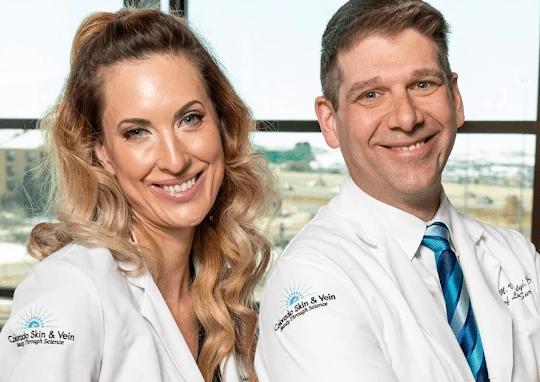
The team at Colorado Skin & Vein, led by David Verebelyi, MD, and Christina Jordan, FNP, CANS, has been caring for Denver-area skin for more than two decades—from everyday medical dermatology to advanced laser and procedural care.
Warts, molluscum, ringworm, and nail fungus are among the most common problems we see, and they make up a large share of our pediatric visits. We treat them every week, which means a fast, confident diagnosis and a plan that starts the day you come in.
- Board-certified physician leading the practice
- Everyday medical dermatology for kids, teens, and adults
- In-office cryotherapy for warts and molluscum contagiosum
- Prescription topical and oral therapy for fungal infections
- Same-week appointments at our Greenwood Village office
Warts & Skin Infections FAQ
How many cryotherapy sessions will I need?
Most warts clear in 2–4 cryotherapy sessions spaced two to four weeks apart. Molluscum often needs fewer. Stubborn plantar warts on the sole of the foot are the exception—they sit under thick, weight-bearing skin and commonly take more sessions, sometimes paired with prescription topicals between visits. We reassess at every appointment so you always know where you stand.
Are warts and molluscum contagious?
Yes, both are. Warts spread through direct skin contact and through shared surfaces—locker room floors, pool decks, shared towels, and razors. Molluscum spreads the same way and also spreads across a person’s own skin by scratching, which is why it multiplies so quickly in kids. Treating the lesions reduces the chance of spreading them to other parts of the body and to family members.
My child has molluscum — should we treat it or wait?
Either can be reasonable, and we will talk it through with you. Molluscum often resolves on its own, but that can take anywhere from several months to a couple of years. We usually recommend treating when the bumps are spreading, getting irritated or infected, sitting somewhere visible that bothers your child, or turning into a problem at school or daycare. Our approach with kids is deliberately gentle—cantharidin is painless when it is applied, and cryotherapy takes only a second or two per bump.
Why won't my wart go away with drugstore treatments?
Over-the-counter wart products use much weaker concentrations of salicylic acid than what we can prescribe, and they simply do not penetrate far enough. Plantar warts in particular grow deep beneath thick sole skin, so a surface treatment never reaches the infected tissue. Combining in-office cryotherapy with prescription-strength topicals gets to the part of the wart the drugstore version never touches.
What causes warts in the first place?
Warts are caused by human papillomavirus (HPV) entering the outer layer of skin, usually through a small cut, crack, or area of moisture. Damp shared surfaces are the classic route—pool decks, locker rooms, and gym floors. Kids and anyone with a weakened immune system pick them up more easily. Having warts is not a hygiene problem; it is just a very common virus.
What's different about plantar warts?
Plantar warts grow on the sole of the foot, where your body weight pushes them inward instead of letting them rise above the skin. That makes them flatter, deeper, and often painful to stand on—many people describe it as a pebble in the shoe. They also take longer to clear than warts on the hands, so we usually plan for more sessions and pair freezing with prescription topical treatment.
How can I stop ringworm from spreading at home or the gym?
Start treatment promptly, keep the area clean and dry, and cover it during contact sports. Do not share towels, clothing, bedding, razors, or shoes, and wash them in hot water. Wear sandals in locker rooms and showers. If a pet has bald or scaly patches, have it checked—pets are a very common source. If the rash keeps returning or spreading despite creams, that is a sign it needs oral antifungal treatment.
Is nail fungus worth treating?
Usually yes — nail fungus does not clear on its own, and it slowly gets thicker, more brittle, and spreads to neighboring nails. A monitored course of oral antifungal medication is what actually clears it; see our nail fungus treatment page for the full picture.
How long does nail fungus treatment take?
The medication course runs several months, and because toenails grow slowly it can be six to twelve months before healthy nail has fully grown out. Full details, including what we monitor along the way, are on our nail fungus page.
Does insurance cover wart and skin infection treatment?
Warts, molluscum, ringworm, and nail fungus are medical conditions, so these visits are typically billed to your insurance like any other medical dermatology appointment. Most plans are accepted. Some quick in-office procedures are also available with cash-friendly flat pricing if you prefer to skip insurance—see our pricing and insurance page for details, or just ask us before we start.
Denver's Trusted Skin Experts
For 20 years, Denver-area families have trusted us with their skin. Clear answers, treatment that starts at the same visit, and pricing you understand before anything begins.