Seborrheic Dermatitis &
Dandruff Treatment in Denver
Flaking that shampoo can’t fix, and redness around the nose and brows, aren’t a hygiene problem — they’re a treatable inflammatory condition. Our dermatology team prescribes the medicated shampoos, antifungals, and topicals that actually settle it, then gives you a routine that keeps it quiet. Appointments available this week.



Understanding Seborrheic Dermatitis
Understanding Seborrheic Dermatitis
Seborrheic dermatitis is an inflammatory reaction to Malassezia, a yeast that lives on nearly everyone’s skin. The yeast itself isn’t the problem — the response to it is. Some skin simply reacts, and that reaction produces the flaking, redness, and greasy scale that brings people in.
It runs on a spectrum. At the mild end it’s ordinary dandruff: loose white flakes on the scalp and shoulders, some itch, nothing obviously inflamed. Further along the same condition becomes red, flaky, sometimes greasy-looking patches — on the scalp, but also in the eyebrows, along the sides of the nose, in and behind the ears, through the beard, and down the mid-chest. Same process, different intensity.
It waxes and wanes rather than holding steady, and Denver gives it plenty to work with. Dry outdoor air and dry indoor heat make winter the hardest stretch of the year for most patients, and stress, illness, and short sleep reliably push a quiet case back into a flare.
Two things it is not. It is not contagious — you cannot catch it or pass it to anyone. And it is not caused by poor hygiene; if anything, scrubbing harder and washing more often strips the skin and makes the flaking worse. Itchy patches in the elbow creases and behind the knees are a different condition and more likely eczema.
This page addresses the adult condition. In infants the same process shows up as cradle cap — yellowish, greasy scale on the scalp that looks alarming, is harmless, and almost always clears on its own within the first year.
How Is Seborrheic Dermatitis Treated?
Treatment has two halves: something antifungal to reduce the yeast driving the reaction, and something anti-inflammatory to settle the redness and itch while it works. Which products, which strengths, and which areas of skin depend on where your case shows up and how stubborn it has been.
- Reduce the yeast – Medicated shampoos and antifungals lower the trigger behind the reaction
- Settle the inflammation – Short, targeted topical courses calm redness and itch quickly
- Hold the result – A simple weekly maintenance routine keeps flares from returning
Lasting Control
Clear the Flakes. Calm the Redness.
No two cases sit in the same places or respond at the same pace. We start with what will clear the flaking and redness you have now, then set the maintenance routine that keeps it from creeping back. Seborrheic dermatitis is medical dermatology, and most insurance plans cover it.
Prescription Medicated Shampoos
Ketoconazole and ciclopirox formulas at strengths the drugstore shelf doesn’t carry. Technique matters as much as the prescription: these need real contact time on the scalp before rinsing, and we’ll show you how often to use them so the effect holds.
Topical Antifungals
Creams, foams, and gels for the places shampoo can’t sensibly reach — the eyebrows, the sides of the nose, the ears, and through a beard. Formulated to work on facial skin without leaving it greasy or irritated.
Low-Potency Topical Steroids
When a flare is red, sore, and itching hard, a short course of low-potency steroid settles it quickly. We keep the strength appropriate to delicate facial and eyelid skin and keep the course brief, which is how these stay safe.
Non-Steroidal Options
Topical calcineurin inhibitors control facial seborrheic dermatitis over the long term without the thinning and other concerns that come with extended steroid use — the better choice when the face, brows, or eyelids need ongoing management.
A Maintenance Rhythm
The honest part: seborrheic dermatitis is controlled, not cured. Once your skin is clear, a simple weekly routine — usually one medicated wash and a product you already own — keeps it quiet with far less effort than treating each flare from scratch.
Have Questions About Flaking or Dandruff? Ask Ava
Our Team
20+ Years of Medical Skin Care
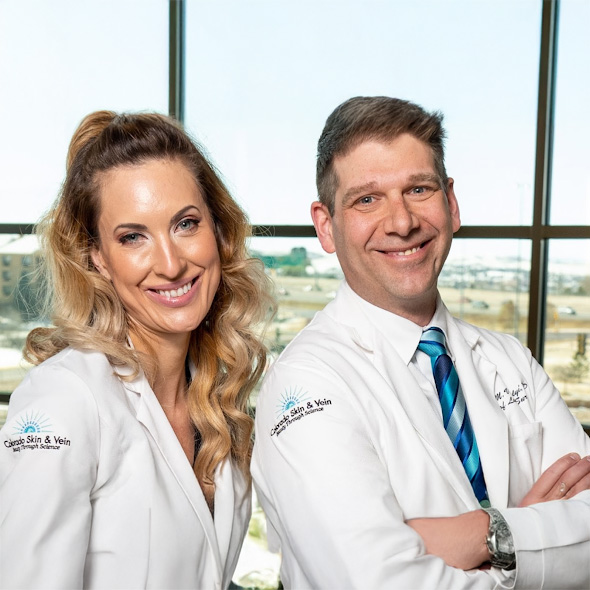
The team at Colorado Skin & Vein, led by David Verebelyi, MD, RVT, and Christina Jordan, FNP, CANS, has been caring for Denver-area skin for over two decades — treating chronic conditions like seborrheic dermatitis, psoriasis, and rosacea alongside advanced laser and vascular medicine.
Recurring skin conditions reward experience. Knowing which strength belongs on eyelid skin, when to step away from steroids entirely, and what a realistic maintenance routine looks like is the difference between controlling seborrheic dermatitis and chasing it every winter.
- Double board-certified physician
- Experienced dermatology provider team
- Fellow & Instructor, American Society for Laser Medicine and Surgery
- Medical dermatology for chronic conditions like seborrheic dermatitis and psoriasis
- Most insurance plans accepted, including Medicare
Frequently Asked Questions
Common Questions About Seborrheic Dermatitis
Dandruff or dry scalp — which do I have?
They are treated very differently, so the distinction matters. Dry scalp produces small, dry, white flakes and usually comes with dry skin elsewhere; it improves when you wash less and moisturize more. Seborrheic dermatitis produces larger, sometimes yellowish or greasy-looking flakes, often with visible redness underneath, and it does not respond to moisturizer — it needs an antifungal. If the skin beneath the flaking looks pink or inflamed, or the flaking also shows up in your brows or beard, it is seborrheic dermatitis.
Is seborrheic dermatitis contagious?
No. You cannot catch it from anyone and you cannot give it to anyone, including through shared pillows, hats, towels, or hairbrushes. The yeast involved already lives on essentially everyone’s skin; what differs is how strongly an individual’s skin reacts to it. That reaction is yours alone.
Why does it flare in winter?
Colorado’s climate is a nearly perfect setup for it. Outdoor air here holds very little moisture to begin with, and indoor heating dries it further, so the skin barrier spends the season compromised and reacts more readily. Shorter days, less sunlight, and the stress and illness that cluster in winter all add to it. Most patients tell us the same thing: worst from November through March, noticeably calmer by summer.
Can it affect my face and beard?
Yes, and this is one of the most common reasons people come in. The condition favors oil-rich skin, so beyond the scalp it shows up in the eyebrows, along the creases beside the nose, in and behind the ears, throughout a beard or mustache, and on the mid-chest. Facial and beard involvement generally needs a cream or foam rather than a shampoo, which is why drugstore dandruff products alone rarely resolve it.
Is it caused by poor hygiene?
No — and washing more aggressively usually backfires. Seborrheic dermatitis is an inflammatory reaction, not a cleanliness issue. Over-washing, hot water, and harsh or heavily fragranced cleansers strip the skin barrier, which leaves the skin more reactive and typically increases the flaking. The right approach is a gentler routine built around the correct medicated product, not a more frequent one.
Will seborrheic dermatitis ever go away completely?
We will be straight with you: it is controlled rather than cured. This is a chronic condition that improves substantially with the right treatment and returns if treatment stops entirely. The realistic goal, and one most patients reach, is clear or nearly clear skin maintained by a simple routine — often a single medicated wash a week — with flares that are rare, mild, and quick to settle.
Is treatment covered by insurance?
Yes, in most cases. Seborrheic dermatitis is a medical condition rather than a cosmetic concern, so visits and prescription treatment are generally covered like any other medical dermatology care, subject to your plan’s deductible and copay. We accept most plans, including Medicare, and our team will confirm your specific coverage before your visit.
What about cradle cap in babies?
Cradle cap is the infant form of the same condition: yellowish, greasy scale on the scalp, sometimes extending to the brows or behind the ears. It looks worse than it is. It does not itch or bother the baby, it is not a sign of anything you did wrong, and it almost always clears on its own within the first year. Gentle washing and softening the scale with a little mineral oil before shampooing is usually all that is needed. Bring your baby in if the area looks infected, spreads widely, or persists past the first birthday.
Why didn't drugstore dandruff shampoo work?
Usually one of two reasons: concentration or technique. Over-the-counter shampoos carry lower concentrations of active ingredients than prescription ketoconazole or ciclopirox formulas, and some cases simply need the stronger version. Just as often the product is fine but the method is not — these shampoos have to sit on the scalp for several minutes before rinsing, and used for a few seconds in a quick shower they cannot do much. If the condition is also on your face or beard, no shampoo will reach it, and a topical cream is what is missing.
Do I need a referral to be seen?
No referral needed. You can book directly with our dermatology team, and we usually have appointments available within the week. If your insurance plan requires a referral for specialist visits, our team will flag that when we verify your benefits so nothing holds up your care.