
Understanding Port Wine Stains
Port wine stains aren’t just birthmarks—they’re treatable vascular conditions. At Colorado Skin & Vein, our advanced pulsed dye laser therapy achieves dramatic fading for patients of all ages, with best results when treatment begins early.

Understanding Port Wine Stains
What Are Port Wine Stains?
Port wine stains, medically known as nevus flammeus, are permanent vascular birthmarks affecting approximately 3 in 1,000 people. These distinctive pink, red, or purple patches result from abnormally dilated capillaries beneath the skin surface—tiny blood vessels that don’t “turn off” as they should during development.
While they can appear anywhere on the body, port wine stains most commonly affect the face, neck, and scalp. Unlike other birthmarks that fade over time, port wine stains persist throughout life and typically darken, thicken, and develop nodular texture without treatment. The good news? Advanced pulsed dye laser therapy can dramatically fade these marks at any age, though earlier intervention yields superior results. At Colorado Skin & Vein, Dr. Verebelyi’s two decades of expertise with the gold-standard Vbeam Perfecta laser delivers the precise, effective care you need—and deserve.







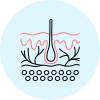

Common Characteristics of Port Wine Stains
Understanding the appearance and progression of port wine stains helps you recognize when expert evaluation can make the most difference.

Questions About Your Port Wine Stain? Ask Ava
Wondering whether your birthmark needs evaluation, what treatment options exist, or when results become visible? Ava, our intelligent vascular health assistant, provides instant, expert-informed answers to your port wine stain questions—anytime, day or night.
Causes & Risk Factors
What Causes Port Wine Stains?
Port wine stains result from a spontaneous genetic mutation affecting blood vessel development during fetal growth. Understanding these factors helps set realistic expectations.
- Spontaneous Genetic Mutation – Port wine stains occur when specific genes regulating blood vessel formation mutate randomly during development, preventing normal capillary regulation.
- Random Occurrence – This is not inherited or caused by anything during pregnancy—it happens spontaneously and cannot be predicted or prevented.
- Present at Birth – Port wine stains are congenital, meaning they're visible from birth and don't develop later in life.
- Progressive Without Treatment – Marks typically darken, thicken, and develop nodules over time, making early treatment most effective.
- Rare Syndrome Association – In approximately 10-15% of cases, especially with periorbital marks, port wine stains may be associated with Sturge-Weber or Klippel-Trenaunay syndromes.
Advanced Treatments for Port Wine Stains
Our specialized pulsed dye laser therapy targets abnormal blood vessels with precision, dramatically fading birthmarks while preserving surrounding healthy skin—effective at any age, with best results when treatment begins early.
Vbeam Perfecta Pulsed Dye Laser
Our advanced 595nm wavelength laser specifically targets hemoglobin in dilated capillaries, collapsing abnormal vessels without damaging surrounding tissue. This gold-standard treatment achieves significant fading with minimal discomfort and downtime.
Customized Treatment Plans
Treatment frequency and intensity are carefully calibrated based on birthmark size, location, color intensity, and skin characteristics. Most patients require multiple sessions spaced 8-12 weeks apart for optimal progressive improvement.
Ongoing Monitoring & Maintenance
Surveillance tracks treatment response and watches for any new vessel development. Periodic maintenance treatments may be needed for optimal long-term outcomes, especially for patients beginning treatment later in life.
Frequently Asked Questions
What exactly is a port wine stain?
What are Port Wine Stains?
A port wine stain (nevus flammeus) is a permanent vascular birthmark caused by abnormally dilated capillaries beneath the skin surface. These appear as pink, red, or purple patches present from birth and don’t fade without treatment.
Are port wine stains dangerous?
Most port wine stains are medically harmless. However, marks near the eyes may be associated with Sturge-Weber syndrome, and thickened marks can bleed or cause disfigurement. Comprehensive evaluation ensures proper monitoring.
Why do port wine stains get darker over time?
The affected blood vessels continue to dilate and multiply with age. Without treatment, increased vessel density causes progressive darkening from pink to deep purple and eventual skin thickening.
Can port wine stains be treated at any age?
Yes. While earlier intervention yields the best results—infants show 80-90% clearance versus 10-20% when treatment begins in adolescence—adults still achieve significant improvement. Treatment is never too late to pursue.
How many laser treatments will I need?
Most patients require 5-15 treatments for significant improvement, varying based on birthmark size, color intensity, location, and age at treatment start. Treatments are typically spaced 8-12 weeks apart.
Is pulsed dye laser treatment painful?
Most patients describe a brief snapping sensation similar to a rubber band. We use advanced cooling technology to minimize discomfort. Topical anesthetics are available, and most find treatments very tolerable.
What happens during a laser treatment session?
After applying eye protection, Dr. Verebelyi uses the Vbeam Perfecta laser to deliver precise energy pulses targeting the birthmark. Sessions last 10-30 minutes depending on size. Temporary purpling (bruising) is expected and indicates effective treatment.
Will the port wine stain completely disappear?
Results vary by patient and age at treatment start. Earlier treatment achieves the best outcomes—some patients experience near-complete to complete clearance. Most see dramatic lightening and improved texture. Realistic expectations are discussed during consultation.
What are the side effects of laser treatment?
Temporary purpling (1-2 weeks), mild swelling, and occasional crusting can occur. These are expected responses and resolve without scarring when aftercare instructions are followed. Serious complications are extremely rare.
Can port wine stains come back after treatment?
Successfully treated vessels are permanently removed. However, new vessels may develop over time, particularly if treatment begins later in life. Periodic maintenance treatments may be needed. Ongoing monitoring optimizes long-term outcomes.
Does insurance cover port wine stain treatment?
Most insurance plans cover medically necessary vascular birthmark treatment when symptoms impact quality of life. Our team handles insurance verification, pre-authorization, and works to maximize your coverage.
How soon will I see results?
Birthmarks begin fading 4-8 weeks after treatment as the body gradually absorbs destroyed vessels. Maximum improvement from each session appears at 8-12 weeks, guiding the timing of subsequent treatments.
Will treatment prevent the mark from getting darker?
Yes. Treatment both fades existing discoloration and prevents progressive darkening and thickening that would otherwise occur. This makes even modest initial improvement valuable for long-term outcomes.
Denver's Trust Vein Experts
For 20 years, Denver-area patients have trusted us for exceptional vascular care. Our combination of medical expertise, cutting-edge technology, and personalized attention delivers outcomes that truly transform lives.