
Sclerotherapy: Proven Vein Treatment
What Is Sclerotherapy?
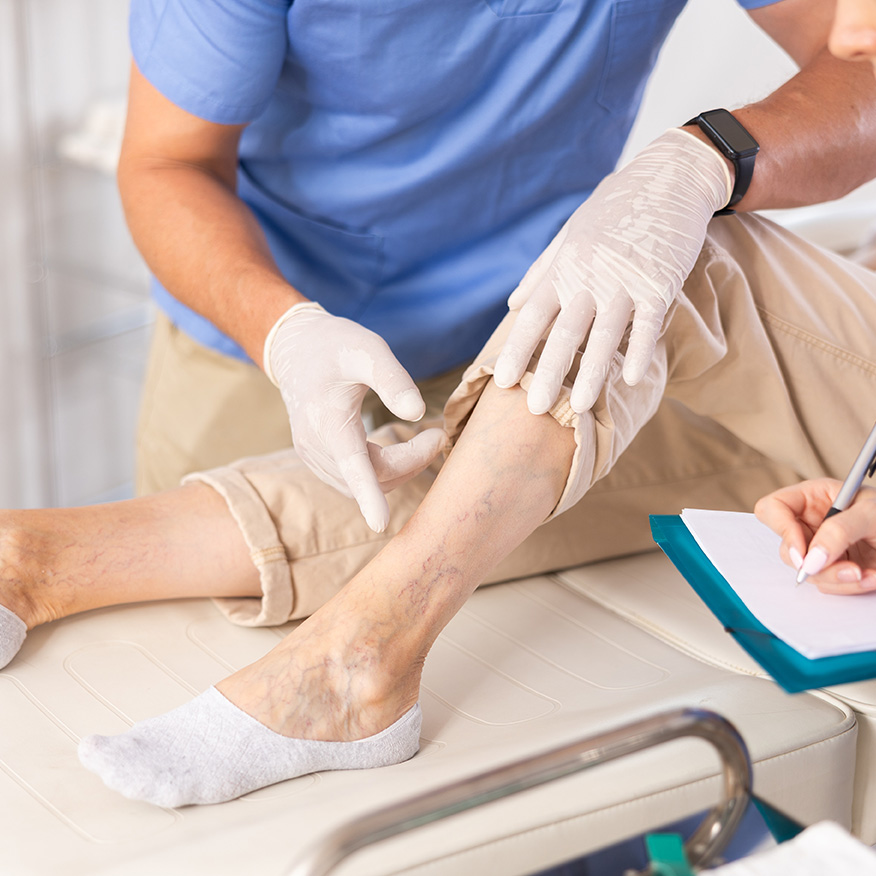
Sclerotherapy is an FDA-approved, minimally invasive treatment that eliminates spider veins and small varicose veins through precision injection. During the procedure, a specialized sclerosing solution is injected directly into unwanted veins, causing the vein walls to collapse, seal shut, and gradually fade from view. Blood flow naturally reroutes through healthier veins, while the body absorbs the treated vessel over time.
For over 80 years, sclerotherapy has been the gold standard for treating spider veins and certain varicose veins. The procedure is performed entirely in-office without anesthesia, allowing most patients to resume normal activities immediately. Clinical studies demonstrate excellent long-term outcomes, with treated veins rarely returning when proper technique is applied.
- Minimally Invasive: Fine needle injections, no incisions required
- Proven Effective: 80+ years of clinical use, excellent success rates
- Quick Treatment: Most sessions complete in 15–45 minutes
- Immediate Return: Resume normal activities same day
- Versatile Application: Treats spider veins and small varicose veins
Vein Conditions Treated with Sclerotherapy
Our specialized sclerotherapy approach targets spider veins, reticular veins, and small varicose veins with precision and proven effectiveness for lasting vein clearance. Sclerotherapy is specifically designed to treat superficial venous conditions that affect appearance, comfort, and confidence.
- Spider Veins:
Sclerotherapy is the gold standard for eliminating spider veins (telangiectasias)—the small, web-like red, blue, or purple veins commonly appearing on legs and thighs. The sclerosing solution causes these tiny vessels to collapse and fade, typically achieving significant clearance within weeks. - Reticular Veins:
These blue-green feeder veins beneath the skin’s surface respond excellently to sclerotherapy. Treating these mid-sized veins often improves associated spider vein patterns and prevents new spider vein formation in treated areas. - Small Varicose Veins:
Certain small varicose veins respond well to sclerotherapy, particularly when they’re not associated with significant reflux. The treatment can improve both the appearance and symptoms of these smaller bulging veins.
Understanding Your Sclerotherapy Treatment
- Vein Assessment:
Prior to injection, Dr. Verebelyi examines your legs in standing position to map visible veins and identify optimal injection points. This assessment determines which veins require treatment and the appropriate sclerosing agent concentration. - Skin Preparation:
Treatment areas are thoroughly cleansed with antiseptic solution. No anesthesia is required as the injection needles are extremely fine, similar to acupuncture needles. - Precision Injection:
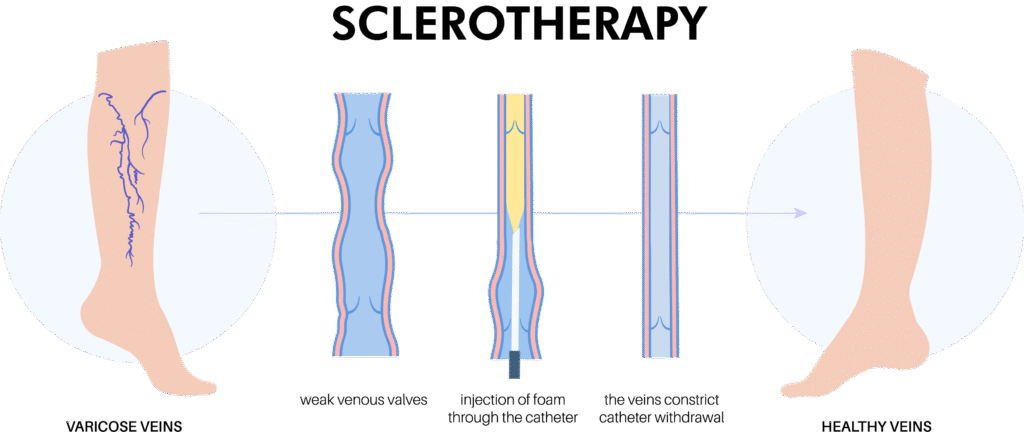
Using a micro-needle, sclerosing solution is carefully injected directly into target veins. Each injection takes seconds. You may feel mild stinging or cramping that quickly subsides. Multiple veins are treated during each session. - Solution Action:
The sclerosing agent irritates the vein lining, causing vein walls to swell, stick together, and seal shut. This chemical reaction immediately begins the vein closure process. - Compression Application:
After injections, compression stockings or bandages may be applied to enhance vein closure and minimize bruising. - Immediate Walking:
You’ll walk for 10-15 minutes immediately following treatment to promote healthy circulation and enhance treatment effectiveness.
What to Expect
Before Treatment
Your initial consultation includes vein assessment and medical history review to confirm sclerotherapy appropriateness and establish realistic treatment expectations.
- Visual Examination: Standing evaluation reveals vein patterns
- Medical History Review: Identifies contributing factors and contraindications
- Treatment Planning: Customized approach based on vein type and distribution
- Pre-Treatment Prep Instructions: Guidance on medications and activity before procedure
During Treatment
Sclerotherapy is performed comfortably in-office without anesthesia. Treatment typically takes 30-60 minutes depending on the number of veins treated.
- Fine Needle Injections: Brief pinching or mild burning sensation
- Multiple Injections: Each session treats numerous veins
- Minimal Discomfort: Most patients tolerate treatment easily
After Treatment
Compression stockings support treated veins while you immediately resume normal activities with minimal restrictions.
- Immediate Walking: 10-15 minutes post-treatment promotes circulation
- Compression Required: Wear stockings for 2-7 days as directed
- Activity Encouraged: Walk daily, avoid prolonged sitting or standing
- Exercise Limitations: Avoid vigorous exercise, hot baths 48 hours
Sclerotherapy Results & Recovery
Immediate & Short-Term Recovery
- Same-Day Activity: Resume normal routine immediately after treatment
- Compression Period: Wear stockings 2-7 days for optimal results
- Initial Response: Treated veins may appear darker or more prominent initially
- Mild Side Effects: Bruising, tenderness, slight swelling (1-2 weeks)
- Activity Restrictions: Avoid intense exercise, hot baths, sun exposure 48 hours
- Work Return: Same day for desk jobs, next day for most occupations
- Follow-Up Schedule: Initial check typically 3-6 weeks post-treatment
Long-Term Outcomes
- Vein Fading: Treated spider veins fade within 3-6 weeks, larger veins 3-4 months
- Success Rates: 60-80% clearance after initial treatment, 90%+ with multiple sessions
- Multiple Sessions: Most patients require 2-4 treatments spaced 4-6 weeks apart
- Permanent Closure: Successfully treated veins do not reopen
- Maintenance Treatments: Occasional touch-ups address new vein development
- Aesthetic Improvement: Significant appearance enhancement, increased confidence
Questions About Sclerotherapy? Ask Ava.
20+ Years of Vascular Excellence
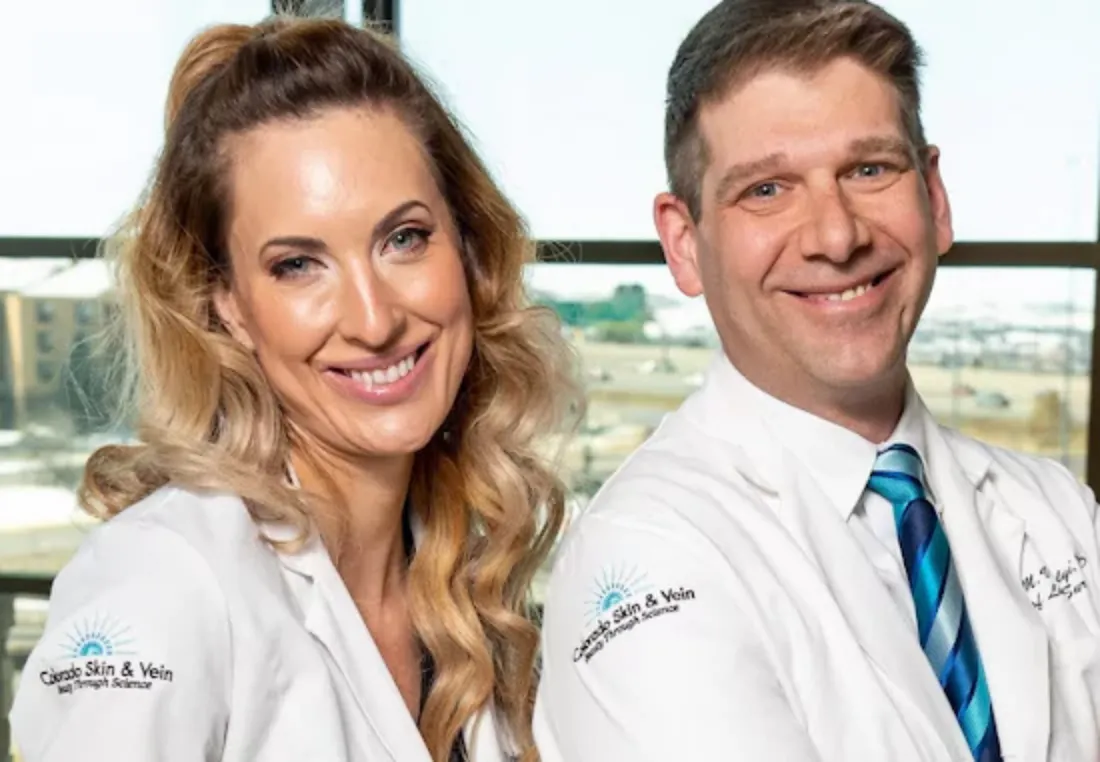
The team at Colorado Skin & Vein, led by David Verebelyi, MD, RVT, and Christina Jordan, FNP, CANS, has been treating vein conditions for over two decades, earning a reputation as leaders in advanced vascular and laser medicine.
Dr. David Verebelyi serves as Chief of Laser Surgery at Colorado Skin & Vein, bringing over 20 years of specialized experience in venous care and minimally invasive vein treatments.
- Double board-certified physician
- Registered Vascular Technician with advanced diagnostic imaging expertise
- Fellow & Instructor, American Society for Laser Medicine and Surgery
- Personally performs all vein procedures using state-of-the-art technology
- Holds honors MD and B.S. in Science & Psychology
Sclerotherapy Frequently Asked Questions
Does sclerotherapy hurt?
Most patients describe sclerotherapy as mildly uncomfortable rather than painful. You may feel slight pinching during needle insertion and brief burning or cramping as solution enters the vein. Discomfort subsides within seconds. No anesthesia is required, and most patients tolerate treatment easily.
How long does sclerotherapy treatment take?
Treatment sessions typically last 15-45 minutes depending on the number and size of veins treated. Initial consultations require additional time for vein assessment and treatment planning.
How many sclerotherapy sessions will I need?
Most patients require 2-4 treatment sessions spaced 4-6 weeks apart for optimal results. Session number depends on vein extent, size, and individual response. Some patients achieve satisfactory clearance with one session, while extensive spider veins may require additional treatments.
When will I see results from sclerotherapy?
Spider veins typically begin fading within 3-6 weeks post-treatment, with continued improvement over 3 months. Larger reticular veins may take 3-4 months to fully fade. Treated veins often appear darker initially before gradually fading from view.
Is sclerotherapy covered by insurance?
Insurance may cover sclerotherapy when treating symptomatic varicose veins that cause pain, swelling, or other medical issues. Spider vein treatment for cosmetic concerns is typically not covered. We verify benefits prior to treatment and can discuss payment options.
What are the side effects of sclerotherapy?
Common temporary side effects include bruising, redness, mild swelling, and darkening of treated veins. These typically resolve within 2-6 weeks. Rare complications include allergic reaction, skin discoloration, small skin sores, or blood clots. Dr. Verebelyi discusses all potential risks during consultation.
Can sclerotherapy treat varicose veins?
Sclerotherapy effectively treats small varicose veins and reticular veins. Larger varicose veins with significant reflux may require alternative treatments like endovenous laser ablation or radiofrequency ablation. Dr. Verebelyi determines appropriate treatment based on vein size and underlying cause.
Is sclerotherapy safe?
Sclerotherapy has an excellent safety profile with over 80 years of clinical use. When performed by experienced practitioners using proper technique, serious complications are rare. Dr. Verebelyi’s expertise and precise approach minimize risks and optimize outcomes.
Will sclerotherapy leave scars?
Sclerotherapy involves only fine needle injections that leave no permanent marks. The injection sites heal completely within days. Some patients develop temporary brown discoloration (hyperpigmentation) along treated veins that typically fades within 3-6 months.
Denver's Trust Vein Experts
For 20 years, Denver-area patients have trusted us for exceptional vascular care. Our combination of medical expertise, cutting-edge technology, and personalized attention delivers outcomes that truly transform lives.