
Understanding Restless Leg Syndrome (RLS)
Restless Leg Syndrome steals your sleep and exhausts your days. Our vein specialists uncover the underlying causes—like chronic venous insufficiency—and deliver personalized treatment plans that bring lasting relief and comfort.

About Restless Leg Syndrome
What Is Restless Leg Syndrome?
Restless Leg Syndrome (RLS) is a neurological condition that creates an uncomfortable, often overwhelming urge to move your legs—especially when you’re trying to rest. You might feel tingling, throbbing, crawling sensations, or aching deep within your legs that only improves temporarily when you get up and move.
For many patients, RLS symptoms worsen at night, disrupting sleep and leaving you exhausted the next day. While RLS can have several causes—including genetics, iron deficiency, or nerve issues—one of the most common and treatable contributors is chronic venous insufficiency. When veins in your legs fail to efficiently return blood to your heart, the resulting swelling and nerve compression trigger the uncomfortable sensations that define RLS.
At Colorado Skin & Vein, we use advanced diagnostic ultrasound to identify vein disease and create customized treatment plans. Addressing the root cause often brings significant, lasting relief—and helps you finally get the restful sleep you’ve been missing.

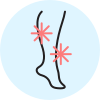
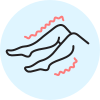

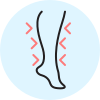
Common Symptoms of Restless Leg Syndrome
Restless Leg Syndrome manifests in several distinct ways—understand what you’re experiencing so you can seek the right care.
Not Sure What Your Symptoms Mean? Ask Ava
Have questions about leg swelling, varicose veins, or whether your symptoms point to chronic venous insufficiency? Ava, our intelligent vein health assistant, provides instant answers tailored to your concerns. Get clear, helpful answers on your schedule—no appointment needed.
Understanding RLS Causes
What Causes Restless Leg Syndrome?
Restless Leg Syndrome doesn’t happen in isolation—it’s often the result of underlying vein disease, lifestyle factors, or genetic predisposition. Understanding your risk factors helps our team create a targeted treatment plan to address the root cause and deliver lasting relief.
- Chronic Venous Insufficiency (CVI) – Faulty vein valves cause blood to pool in your legs, compressing nerves and triggering RLS symptoms—the most common treatable cause.
- Family History & Age – RLS often runs in families and typically worsens with age as vein health declines and circulation becomes less efficient.
- Gender & Pregnancy – Women are more susceptible to RLS, especially during pregnancy when hormonal changes and increased blood volume put extra pressure on leg veins.
- Iron Deficiency – Low iron levels disrupt dopamine production in the brain, contributing to the neurological dysfunction underlying RLS.
- Lifestyle Factors – Prolonged sitting or standing, sedentary habits, and excess weight all impair circulation and increase venous pressure, worsening RLS symptoms.
RLS Treatment Options
Endovenous Laser Ablation (EVLA)
Using laser energy, we close off damaged veins from the inside—restoring healthy circulation and reducing the nerve compression that triggers RLS.
Radiofrequency Ablation (RFA)
Similar to EVLA, RFA uses controlled heat to seal faulty veins shut. It’s a proven treatment for chronic venous insufficiency and has been shown to dramatically improve RLS symptoms in many patients.
Common Questions About RLS
Common Questions About Restless Leg Syndrome
What is Restless Leg Syndrome?
Restless Leg Syndrome (RLS) is a neurological condition that causes uncomfortable sensations in your legs—tingling, aching, crawling, or throbbing—along with an irresistible urge to move them. Symptoms are typically worse at night and during rest, making it difficult to fall asleep or stay asleep. RLS affects approximately 10–15% of Americans and is often linked to chronic venous insufficiency (CVI), where damaged vein valves cause blood to pool in the legs, compressing nerves and triggering RLS symptoms.
How do I know if I have RLS?
Common signs include uncomfortable leg sensations (tingling, crawling, aching), an overwhelming urge to move your legs (especially at night), temporary relief with movement, difficulty falling asleep, involuntary leg twitching during sleep, and daytime fatigue. If these symptoms sound familiar and they’re disrupting your sleep or daily life, schedule a consultation for a proper evaluation.
How is RLS diagnosed?
Diagnosis begins with a thorough medical history and physical exam. We’ll ask about your symptoms, family history, medications, and lifestyle. If we suspect vein-related RLS, we use advanced diagnostic ultrasound to visualize blood flow, identify faulty valves, and map areas of venous insufficiency. This precise imaging guides your personalized treatment plan.
What are the best treatments for RLS?
Treatment depends on the underlying cause. For vein-related RLS, we offer endovenous laser ablation (EVLA), radiofrequency ablation (RFA), sclerotherapy, and compression therapy. Lifestyle changes—regular exercise, leg elevation, avoiding caffeine—also help. In complex cases, medications or iron supplementation may be recommended.
Will my insurance cover RLS treatment?
If your RLS is related to chronic venous insufficiency, vein treatments are often covered by insurance because they’re medically necessary. We’ll perform a thorough evaluation, document your symptoms, and work with your insurance provider to maximize coverage. Our team handles all the details.
What lifestyle changes help with RLS?
Regular moderate exercise, avoiding caffeine and alcohol (especially in the evening), maintaining a consistent sleep schedule, elevating your legs, staying hydrated, and wearing compression stockings all support better circulation and reduced RLS symptoms.
Denver's Trust Vein Experts
For 20 years, Denver-area patients have trusted us for exceptional vascular care. Our combination of medical expertise, cutting-edge technology, and personalized attention delivers outcomes that truly transform lives.