
Hyperhidrosis Treatment
in Denver
Excessive sweating — palms, underarms, feet, face — is a medical condition with a real treatment ladder behind it, not a hygiene problem. Our dermatology team works through that ladder discreetly, starting with the least invasive option likely to control it. Appointments available this week.





Understanding Hyperhidrosis
Understanding Hyperhidrosis
Primary focal hyperhidrosis is a nerve-signaling condition. The sweat glands themselves are normal — the signal telling them to switch on simply fires far more often than it needs to, and it does so in specific places: the palms, the underarms, the soles, sometimes the face. It usually begins in childhood or the teenage years, it often runs in families, and it has nothing to do with fitness, weight, or hygiene.
It is also more common than most patients assume — roughly one in twenty people — and dramatically undertreated, largely because people conclude on their own that nothing can be done about it. That conclusion is wrong. Sweating that began suddenly in adulthood, or that occurs across the whole body rather than in set areas, is a different picture, and we screen for secondary causes such as thyroid conditions or medication side effects before treating.
How Is Hyperhidrosis Treated?
Treatment follows a ladder, and most patients never climb all of it. We begin with the least invasive option likely to work for the area involved, give it a fair trial, and step up only if the result falls short. Each step is documented, which matters later if insurance coverage for injections comes into play.
What patients say they gain is specific and ordinary: shirts that stay dry through a workday, a handshake offered without a second thought, a presentation given without watching the room. That is the point of treating this properly.
- Rule out a cause – Thyroid conditions and certain medications can drive sweating, and those are screened first
- Start topical – Prescription antiperspirants and glycopyrronium resolve a great many cases on their own
- Step up when needed – Botulinum toxin injections and oral therapy handle what topical treatment cannot
The Treatment Ladder
Start Simple. Step Up Only If You Need To.
The right starting point depends on where you sweat and how much. Underarms, palms, soles, and face each respond differently, and what is comfortable to use on one area is impractical on another. We match the treatment to the site and reassess at a set interval rather than leaving you to judge it alone. Care for hyperhidrosis is medical dermatology, and most insurance plans cover the visit.
Prescription Antiperspirants
Clinical-strength aluminum chloride works well when it is used correctly, and technique is most of the battle — applied to completely dry skin at night rather than in the morning, and not straight after shaving. We show you exactly how, and adjust the strength if irritation shows up.
Topical Glycopyrronium
A prescription wipe used once daily that quiets the sweat signal at the skin rather than plugging the duct. It suits patients who found aluminum chloride irritating, and it is a straightforward step to try before moving on to injections.
Botox for Sweating
Botulinum toxin placed just under the skin interrupts the nerve signal reaching the sweat glands, reducing underarm sweating for months at a time. Here it is a medical treatment for hyperhidrosis, not a cosmetic one — and it is often billable to insurance once prescription topical therapy has been tried and documented.
Oral Therapy
Systemic medication for sweating that is widespread, or that breaks through in situations topical treatment cannot reach. It is dosed conservatively and reviewed carefully, since the same mechanism that reduces sweating produces predictable side effects.

Have Questions About Sweating? Ask Ava
Wondering whether what you deal with counts as hyperhidrosis, what treatment for sweating actually involves, or how insurance coverage tends to work? Ava, our skin health assistant, answers privately and instantly — available 24/7.
Our Team
20+ Years of Medical Skin Care
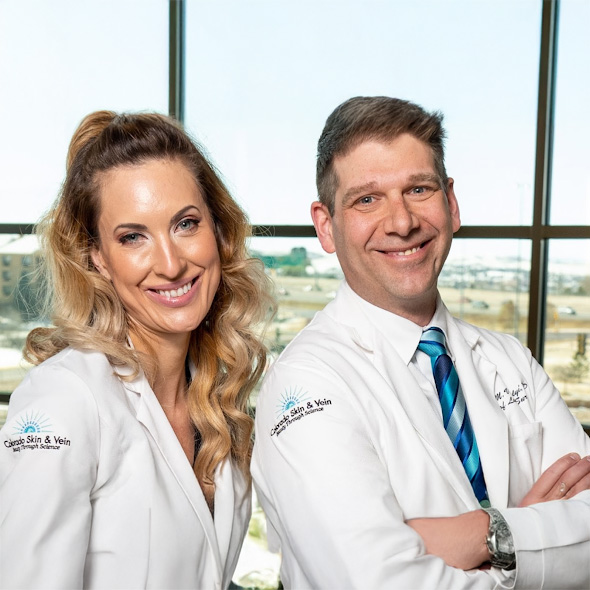
The team at Colorado Skin & Vein, led by David Verebelyi, MD, RVT, and Christina Jordan, FNP, CANS, has been caring for Denver-area skin for over two decades — treating medical conditions such as hyperhidrosis alongside advanced laser and vascular medicine.
With injections, technique is what separates a good result from a disappointing one. Mapping the area that actually sweats, spacing the injections correctly, and dosing for the site is routine work here, and it is why patients return on schedule rather than going looking for someone new.
- Double board-certified physician
- Experienced dermatology provider team
- Fellow & Instructor, American Society for Laser Medicine and Surgery
- Medical dermatology for conditions like hyperhidrosis
- Most insurance plans accepted, including Medicare
Frequently Asked Questions
Common Questions About Hyperhidrosis
Is excessive sweating a medical condition?
Yes. Primary focal hyperhidrosis is a recognized medical diagnosis, not a matter of hygiene, nerves, or fitness. The nerves controlling your sweat glands signal far more often than they need to, most commonly in the underarms, palms, soles, and face. It is diagnosable, it is treatable, and it is handled here the way any other medical condition is.
Does insurance cover treatment?
Visits for hyperhidrosis are medical dermatology, and most plans cover them as they would any other medical visit. Botulinum toxin injections for underarm sweating are frequently billable as well, though plans generally require documentation that prescription topical treatment was tried first and did not adequately control the sweating. That is one reason we start with topicals and record the result — it builds the pathway to coverage if you need the next step. We verify your specific benefits before scheduling injections.
How well does Botox for sweating work?
For underarm sweating it works reliably. Most patients notice a clear reduction within two to seven days, with the full effect by roughly two weeks, and the result generally holds for four to six months before a repeat treatment is due. Palms and soles respond as well, though the duration there is often somewhat shorter.
Does it hurt?
The injections are shallow and use a very fine needle. The underarm is a forgiving area, and most patients describe brief stinging and nothing more. Palms and soles are more sensitive, so we use topical numbing, cooling, or a nerve block there. Tell us your tolerance and we will plan around it.
Will I sweat somewhere else instead?
A fair question, and the honest answer is that mild compensatory sweating elsewhere is possible, but it is uncommon after underarm treatment and usually minor when it does occur. Treating a focal area does not push the same volume of sweat out somewhere else. That concern comes largely from surgical nerve procedures, which are a different category of treatment entirely.
Can palms and feet be treated too?
Yes. Palms, soles, face, and scalp are all treatable, and the approach is chosen by site. Prescription topicals and glycopyrronium are often the practical first step for palms and soles, with injections used when topical treatment falls short. Insurance coverage for injections outside the underarms varies more from plan to plan, so we check before proceeding.
How is this different from cosmetic Botox?
Same medication, different purpose, different technique, and a different billing pathway. For sweating, the product is placed shallowly across a mapped treatment area so it reaches the sweat glands, rather than into specific facial muscles, and the dose is calculated for the surface being treated. It is documented as medical treatment for hyperhidrosis. Looking for cosmetic Botox? That lives here.
What should I try before my visit?
Nothing elaborate. If you use an over-the-counter antiperspirant, note which one and whether it helps at all, and try applying it at night on dry skin rather than in the morning — that change alone helps some patients. Bring a list of your medications, since a few can increase sweating. It also helps to note where and when the sweating happens and what it interferes with; that shapes the plan more than anything else.
When does sweating signal something else?
Sweating that begins suddenly in adulthood, occurs over the whole body rather than in set areas, wakes you at night, or arrives alongside weight loss, fever, or a racing heartbeat deserves a broader look. Thyroid conditions, medications, blood sugar changes, and other causes can all drive it. We screen for those before treating, and refer when the picture calls for it.
Do I need a referral?
No. You can book directly with our dermatology team, and we usually have appointments available within the week.